Profit Portholm
Why Investment Behavior Looks Different Now
Sign Up now
 Profit Portholm


Investment behaviour now reflects a different structure compared to earlier periods. Activity is no longer shaped only by simple buying and selling decisions. Liquidity forms in layers, often gathering around specific zones where participation builds over time. These zones tend to attract attention when price revisits them.
Ever noticed how price slows or pauses at the same levels? That pattern often connects to positions formed earlier. It feels like returning to a spot where a crowd once stood, something there still holds attention. Examining these areas reveals how movement links to positioning beneath the surface. This shift calls for reading how structure forms rather than relying on basic patterns.
Another angle focuses on how order flow now plays a stronger role in shaping outcomes. Trades depend on how instructions are placed, absorbed, and completed across levels. Some get absorbed with little effect, while others trigger sharp reactions when liquidity is thin. For example, clusters of buying interest can create short term stability, while gaps can lead to sudden moves. Why do similar setups behave differently? The answer often lies in how these instructions are arranged below the surface. Evaluating these interactions helps explain changing behaviour across conditions.
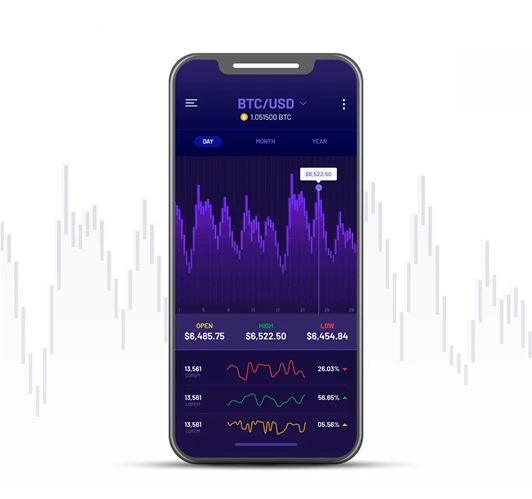
Large participants now act through strategies that unfold over time rather than through single actions Profit Portholm. Their positioning often builds gradually, shaping how trends form and where price finds support or resistance. Comparing how these positions develop with how smaller participants react helps explain why certain moves extend further. Ever noticed how some trends keep going even when they seem over? It feels like a slow push that suddenly becomes hard to stop. This difference shows that investment is no longer just about individual decisions but about understanding how larger forces influence direction Profit Portholm.

Curiosity often begins with simple questions. Why does price pause at certain levels? Why do some moves fade while others continue? A clear starting point helps bring direction to these thoughts. Profit Portholm supports this step by connecting individuals with organisations that explain how financial systems function in practice. This approach does not rush into complex ideas. Instead, it allows gradual exposure to how decisions are formed.

Entering investment without a clear base can feel confusing. New traders often notice movement but struggle to understand what causes it. A structured approach introduces key ideas such as structure and liquidity, helping explain why reactions happen at certain levels. For instance, repeated activity around one area may point to strong participation rather than random movement.
Interest in investment learning often starts with looking at how financial systems are set up rather than focusing only on outcomes Profit Portholm. Some learning settings explain how structure forms through layers of participation, where different groups act with different aims. These discussions often cover how liquidity is placed across levels and how that placement affects execution instead of surface movement.

Price movement connects closely to how liquidity is spread across different levels. Some learning settings explain how areas with higher order concentration attract repeated interaction, while thinner zones allow quicker shifts. This view directs attention to how buying and selling interest is arranged beneath the surface. Ever noticed how price slows in some areas but moves quickly through others? It’s like walking through a crowded street versus an empty one movement naturally changes based on space. Instead of seeing movement as random, individuals can interpret how activity forms around these zones and how participation shapes continuation or hesitation within structured conditions.
Before engaging with investment learning, it helps to examine how decision processes differ across participants. Some methods follow fixed rules, while others adjust based on changing conditions. Learning discussions may compare how these approaches behave within similar structures, showing how interpretation can vary even when the environment appears the same.
Investment learning often introduces how participants manage exposure rather than focusing only on entry points. Some discussions explore how positions are adjusted, reduced, or held under different conditions. Comparing these actions shows how exposure is spread across decisions instead of being tied to a single moment. Ever noticed how one small change can shift the whole outcome? It’s like adding or removing weight from a balance tiny adjustments can change the result.
Different assets behave in their own way under similar conditions Profit Portholm. Some adjust slowly as participation builds, while others react quickly when activity concentrates in tight areas. Learning settings may place these side by side to show how the same pressure leads to different outcomes. Ever wondered why one market feels calm while another moves fast at the same moment? It’s like comparing a river to a waterfall both carry water, but the flow feels completely different. Recognising this helps build a clearer view of how behaviour changes across asset types.
Before going deeper, it helps to see how larger participants shape structure through their positioning choices Profit Portholm. Some discussions focus on how exposure builds gradually instead of appearing all at once. These patterns often form within defined ranges over time. Why do certain levels hold for longer than expected? Often, it links to how these positions are built step by step. Interpreting this behaviour adds depth to how structure is understood.
Time horizon plays a big role in how activity is read. Short term views often reflect immediate positioning, while longer term perspectives show how capital is arranged over wider periods. Looking at both can lead to different conclusions from the same structure. Ever changed your view after stepping back for a moment? It’s like zooming out on a photo details look different when seen from a distance. This contrast highlights the need to match interpretation with the intended timeframe.
Financial systems move through phases where capital rotates between expansion and contraction. These shifts do not happen randomly. They often follow patterns where attention moves from one area to another over time. Learning discussions may compare how different phases affect where activity builds and how positioning changes during each stage. Ever noticed how some sectors stay active for a while, then suddenly slow down? It’s like seasons changing what grows in one phase may fade in another.
Understanding often improves when individuals examine behaviour during live conditions instead of depending only on theory. Seeing how positions are created, modified, or reduced step by step reveals how actions develop over time. This process highlights sequence and timing rather than fixed ideas.
Staying relevant in investment often depends on how decisions align with positioning rather than reacting quickly. A structured approach starts by identifying where exposure is building or reducing and what that suggests about intent. Focus shifts away from visible movement and moves toward how participation is arranged across levels. This view helps highlight where activity is forming before it becomes clear.
Another layer involves comparing how choices develop under different conditions. Some situations show concentrated participation, while others spread activity more widely. These contrasts change how situations are read and approached. By evaluating how decisions shift across these conditions, traders move away from fixed responses and begin shaping a more adaptable process.
A further angle looks at discipline within structured environments. Consistency often comes from avoiding the urge to act on every visible change and instead waiting for alignment. It’s like waiting for the right moment to cross a busy road moving too early creates risk, but patience brings clarity. This shift from impulse to control supports steadier execution over time.

Daily routines often repeat in ways that reveal patterns. Instead of separating learning from work, tasks can be examined to find where small changes improve efficiency.
For example, reviewing how time is used across activities may show where effort gets wasted. These insights allow learning to blend into regular work instead of becoming an extra task.
Handling regular responsibilities while improving abilities can feel difficult. One practical approach involves combining both instead of separating them. Routine tasks can act as a testing ground for small changes. For example, while completing familiar work, different methods can be tried without interrupting progress. Ever wondered how improvement fits into a busy schedule? It’s like adjusting your walking style during a daily commute you still reach the destination, but movement becomes smoother over time. This approach allows gradual development without needing extra time blocks, making progress easier to maintain within existing routines.
Awareness often develops through steady refinement rather than sudden shifts. Small changes in how tasks are arranged or how decisions are handled can shape better outcomes over time. Instead of making large changes, focusing on one adjustment at a time allows clearer evaluation. For instance, dividing complex work into smaller parts makes it easier to interpret and improve each step. Why do small changes matter so much? It’s like tuning a musical instrument tiny adjustments can completely change the sound. These steady improvements create a process where understanding grows naturally alongside everyday activity.
Daily work constantly produces signals through results and performance Profit Portholm. These signals often go unnoticed. Interpreting them can reveal where effort leads to smoother outcomes and where delays appear. Small patterns begin to stand out over time. Ever wondered why some tasks feel easier on certain days? It’s like noticing which route home has less traffic you start adjusting without even thinking. Using this feedback allows steady refinement of approach.
Repeating tasks creates a natural space for improvement. Each repetition offers a chance to adjust and compare outcomes. Over time, this builds familiarity with how small changes affect results. Instead of treating repetition as routine, it can act as a testing ground. It’s like practicing the same shot in a game each attempt feels similar, but control improves little by little. This process supports gradual skill development without added pressure.

Investment learning does not always take place in fixed sessions. Many individuals develop insight by following financial behaviour alongside their daily routines. Short periods of attention, such as examining how positioning develops or how liquidity shifts at certain levels, can gradually build awareness.
This approach allows learning to grow continuously rather than being limited to scheduled study time.
As exposure builds in small intervals, focus often shifts from surface movement to interpreting how activity develops beneath it. For example, comparing how order flow behaves at different times of the day can reveal patterns that may not appear during longer sessions. Ever noticed how small moments can reveal more than long hours? It’s like catching highlights of a game you may not watch everything, but the key moments still tell the story. These small insights connect over time, creating a broader perspective without requiring extended study blocks.
Financial activity does not follow a fixed timetable, which makes adaptable learning methods more practical. Instead of waiting for a set study period, individuals can shift their focus based on what is happening at the moment. This allows attention to stay connected with ongoing conditions rather than being delayed.
For example, examining how positioning adjusts during phase changes can offer immediate context that may not appear later. Ever noticed how timing changes the way something is understood? It’s like watching traffic live versus hearing about it later the experience feels completely different.
This flexibility also allows comparison across different situations. Looking at how similar setups behave under changing conditions highlights differences in execution rather than relying on one fixed view. Over time, this builds a more adaptable way of interpreting financial behaviour.

Short moments of attention can reveal how choices take shape. Instead of looking only at results, individuals can examine how participants adjust exposure, handle positions, or respond to shifting conditions. These small insights show that decision processes vary depending on the situation, offering a clearer view of how approaches develop in practice.
Seeing these moments repeatedly helps connect timing, positioning, and behaviour. Over time, patterns begin to stand out. Ever noticed how something unclear becomes obvious after a few repetitions? It’s like watching the same scene again you start catching details that were missed the first time. This builds awareness of how decisions form step by step rather than appearing suddenly.
Learning in this way also introduces risk thinking through real situations. Instead of treating risk as a fixed idea, individuals can examine how exposure changes across different conditions. For instance, comparing positioning near thin areas can show how movement expands or slows based on placement. These observations highlight how risk shifts depending on where and how positions are managed.

Learning discussions may introduce structured ideas, but real analysis depends on how those ideas are used in live conditions. Spotting areas where activity gathers is one step, yet what matters is how interaction develops within those areas.
For instance, a level may attract attention, but the way participation behaves there decides whether movement continues or slows. This shows that recognising structure is only a starting point, while deeper interpretation comes from examining how behaviour unfolds within it.
Views shared in financial discussions often come from personal interpretation rather than actual behaviour. An idea may sound convincing until compared with how positions are built or reduced in practice. Matching opinions with observable activity helps reveal gaps between belief and action. Ever followed advice that seemed right but did not match reality? It’s like following a map that looks correct but leads somewhere unexpected. This habit builds a more careful way of evaluating information.
Understanding how liquidity and order flow connect can bring clarity, but it does not remove difficulty from decision making. Some conditions show clear patterns, while others involve mixed positioning where signals overlap. Reading these situations requires examining how exposure is handled instead of expecting consistent outcomes. This shows that structure offers guidance, not certainty, and choices still depend on the situation at hand.
Large participants often build positions over time instead of acting all at once. This process may appear as steady activity within a range. However, the shift from buildup to expansion is not always clear in advance. Examining how positioning develops can suggest possible intent, yet timing still varies. It’s like seeing clouds gather without knowing exactly when it will rain. This shows that behaviour can be studied, but exact outcomes depend on how positioning continues to change.
Participants approach financial situations in different ways based on their goals and time horizons. Some focus on limiting exposure, while others aim to capture shorter moves. These differences shape how the same situation is interpreted. Comparing these approaches shows that no single method fits every case. Decisions depend on how each participant balances timing, exposure, and positioning within their own approach.
Economic conditions often guide how capital shifts across different areas rather than focusing only on visible movement. Changes in borrowing or spending conditions can lead participants to move exposure between sectors. In some periods, stability becomes the focus, while in others, expansion takes priority.
Ever noticed how attention shifts from one area to another over time? It’s like people moving between markets depending on what’s available that day. These shifts show how structure evolves as capital flows through different layers of participation.
| 🤖 Signup Expense | Completely free registration |
| 💰 Charges Applied | No hidden charges |
| 📋 Sign-Up Method | Straightforward, fast registration |
| 📊 Educational Topics | Focused learning in Cryptocurrency, Forex, and Investments |
| 🌎 Countries Available | Operational in most countries, excluding the USA |